
Automated logistics
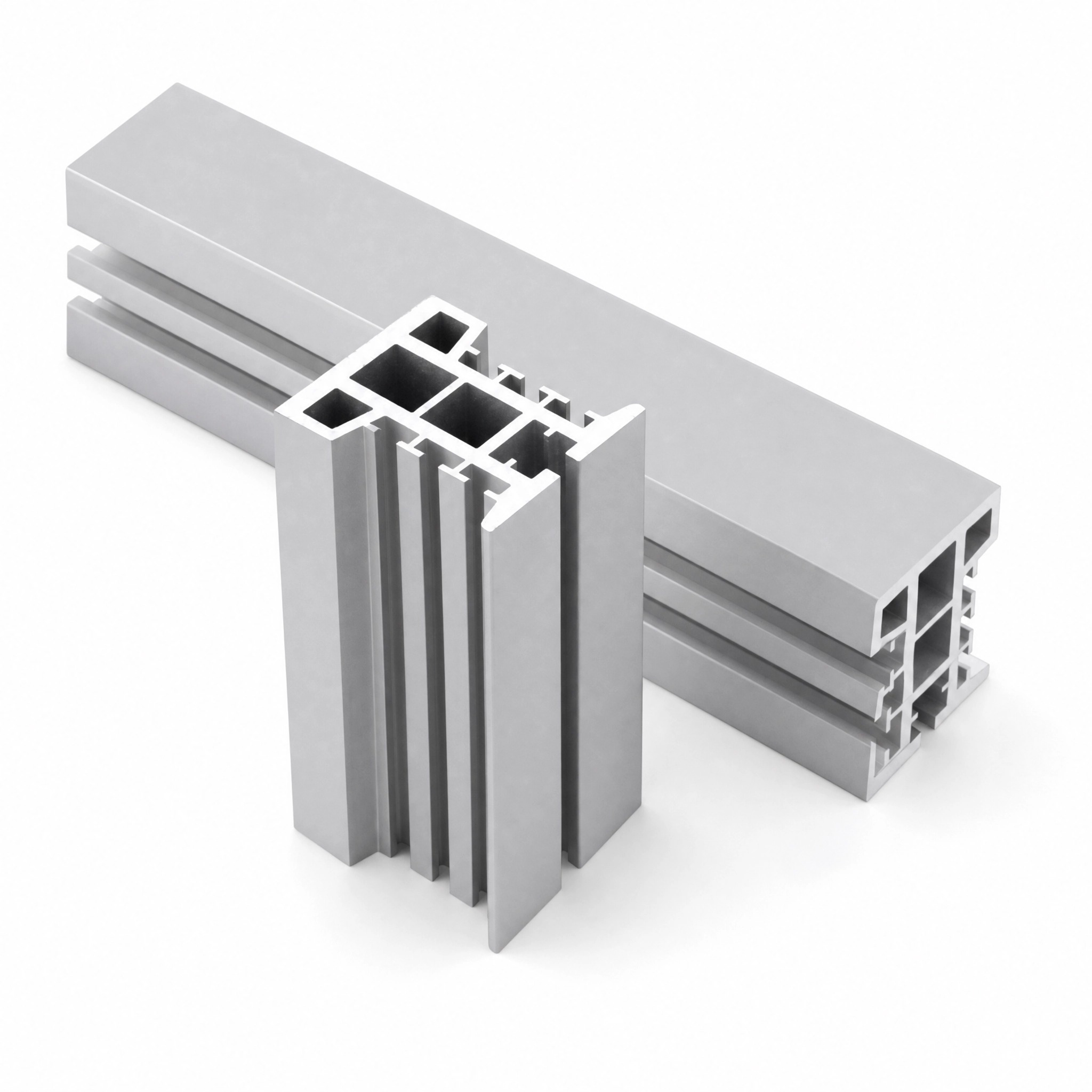
Semiconductor OHT Rail - Cleanroom Chemistry and Dry Running
Particle count is the visible requirement; molecular contamination is the one that hits yield. Sealing, cleaning chemistry, dry running and heat from contactless power.
Detalles del producto
An OHT rail in a 300 mm fab has to meet two cleanliness requirements that are usually discussed as if they were one. The first is particle shedding: no debris in the air. The second is molecular contamination: no volatile compounds condensing onto wafer surfaces or into the FOUP microenvironment. A rail can pass the particle count and still fail on the second, and the second is the one that affects yield.
The main OHT rail page deals with particle generation and the running face. This page is about the chemistry: what the rail emits, what the cleaning regime does to it, and why the finishing specification on a cleanroom rail is a chemical document as much as a mechanical one.
Two kinds of clean, and only one of them is visible
Particle contamination is counted. A Class 100 (ISO 5) space allows about 3,520 particles of 0.5 µm or larger per cubic metre, and a rail either meets that or does not. Particles are mechanically generated — wheel wear, abrasion, a chipped coating — and they are controlled by making the running pair harder and smoother.
Molecular contamination is not counted in the same way. Airborne molecular contamination covers acids, bases, organics and dopants, and it does damage by adsorbing onto surfaces. Ammonia degrades chemically amplified resists. Organic compounds form films that change surface energy and interfere with bonding and inspection. These species come from materials, from cleaning agents, from sealants and from people, and a rail assembly is one of the many surfaces contributing.
For a rail the practical consequence is that "anodised" is not a complete specification. The type of anodising, the sealing method and the absence of lubricants all affect what the surface gives off in service.
Especificaciones
| Elemento | Valor de referencia | Notas |
|---|---|---|
| Cleanroom class | Class 100 (ISO 5) | Particle performance of the assembled rail and trolley |
| Straight-run speed | Up to 6 m/s | Curve and switch sections are limited separately |
| Positioning accuracy | Reference ≤ ±1 mm | System figure including vehicle encoder |
| Section material | 6063-T5 / 6061-T6 | Low copper content preferred for cleanroom work |
| Superficie | Anodised, sealed | Sealing step is a cleanliness requirement, not cosmetic |
| Integrated functions | Non-contact power, communication waveguide | Formed in the extrusion, position fixed at die design |
| Lubrication | None on the running face | Dry running is a design requirement, not a preference |
Reference values are from shipped projects. The value on your order is set by your drawing, and we confirm the achievable tolerance, surface specification and any cleanroom documentation in writing before you order.
What aluminium emits, and what it does not
Bare aluminium is reactive. It forms a native oxide within seconds of being exposed to air, and that oxide is stable and thin — a few nanometres. In terms of outgassing, clean aluminium in a dry environment is a good material: it does not emit plasticisers, it does not release sulphur compounds, and it has no volatile organic content of its own.
The problems come from everything added to it. Machining coolant residues trapped in blind holes or in the root of a thread will outgas for a long time. Handling oils from bare hands are a significant organic source and are invisible. Masking tape adhesive left at a masked area is worse, because it is only released when the part warms up.
This is why a cleanroom rail should be cleaned and bagged rather than merely machined and shipped. The specification we work to is: aqueous cleaning after machining, no silicone or petroleum-based lubricant at any stage, and double-bagged with the inner bag opened only inside the cleanroom.
The sealing step in anodising is the part that matters
Anodising builds a porous aluminium oxide layer. The pores are what makes anodised surfaces take dye and what makes them absorb contamination. Sealing closes those pores, usually by hot water or steam hydration, and a sealed surface has dramatically lower adsorption and much better corrosion resistance.
For a cleanroom application the sealing matters more than the coating thickness. An unsealed 25 µm coating has more open surface area than a sealed 10 µm coating, and open surface area is where airborne molecular contamination accumulates and where cleaning agents are trapped and later released.
Two further details are worth specifying. First, the coating should be free of copper and other heavy metal inclusions — 6063 with low copper is preferred, and some standard anodising processes use nickel or cobalt in the seal, which is a contamination source in a fab. Second, the running face and the areas that will be handled should be sealed the same way; a rail that is sealed on the visible faces and left raw inside a slot is a hidden source.
Cleaning agents do more damage than the fab air
An anodic layer is amphoteric. It resists mild acids and mild alkalis, but it is attacked at both extremes, and the practical window is roughly pH 4 to 9. In a fab, the wipes and agents used around the rail include isopropyl alcohol, which is harmless to the coating, and alkaline or strongly acidic cleaners, which are not.
The failure is slow and looks like contamination rather than corrosion. The coating thins, the surface roughens at the micro scale, particles increase, and the rail becomes a worse source than it was on day one. It is one of the few cases where the maintenance regime accelerates the problem it was meant to solve.
What we recommend is that the cleaning agents intended for the rail are agreed before the finish is specified, so that the coating type and thickness are chosen against the actual chemistry rather than a generic cleanroom assumption.
No lubricant means wear has to be designed out
A fab rail runs dry. Oil and grease are not permitted on the running face, because any lubricant film is a contamination source and a particle trap. That removes the mechanism that keeps most industrial rail systems alive, and it means the wear couple has to be chosen so that it works without a film.
The combination that works is a hard anodised aluminium running surface against a wheel of a different material with a lower modulus and a controlled hardness — typically a filled polymer or a polyurethane of specified shore hardness. The aluminium must be harder than the wheel, so that wear happens on the consumable wheel rather than on the rail. When this is reversed — a soft rail and a hard wheel — the rail wears and generates exactly the metallic particles the cleanroom cannot tolerate.
Wheel replacement then becomes a planned maintenance item, and the rail becomes effectively permanent. That is the correct trade in a fab, where replacing a rail is a shutdown and replacing wheels is routine.
Non-contact power puts heat into the rail
Integrated non-contact power is now common on OHT rails, and it changes the thermal picture. An inductive transfer system has a loss of roughly 8 to 15 percent, and that loss appears as heat in the pickup on the vehicle and in the rail-side conductor. On a rail that is already inside a temperature-controlled cleanroom, this is a local heat source in the one place where thermal movement affects positioning accuracy.
The rail is also a good heat path, being continuous aluminium, so heat from a concentrated loss travels along the section and produces a gradual expansion over several metres rather than a local hot spot. That is better for the electronics and worse for the rail's own alignment, because a gradual expansion over a long run accumulates into a real movement at a fixed end.
The practical answer is the same as on any long aluminium run: fix one point, let the rest slide, and design the joints to accommodate the movement rather than restraint it.
Dónde no encaja
This rail is not the right choice in four cases. If the fab requires a metal-free zone for a specific process — some metrology and inspection areas do — an aluminium rail is excluded regardless of coating. If the OHT load exceeds about 50 kg per vehicle at 6 m/s, the section needed for stiffness becomes heavy enough that a steel rail with a polymer running strip is the more practical route. If the building cannot accept a rail fixed at thousands of points along a ceiling grid, a rail system that can be installed as pre-assembled modules on a separate frame is better. And if the client's cleaning protocol cannot be defined before the finish is ordered, we would rather wait — the coating has to be chosen against the chemistry, not after it.
Qué enviar para una cotización
- The cleanroom class and any molecular contamination specification, not just the particle count.
- The cleaning agents and wipe materials that will be used on and around the rail.
- The vehicle load, speed and the required positioning accuracy.
- Whether non-contact power and communication are integrated, and their mounting position in the section.
Send those four and we can specify the coating type, the sealing method and the wheel material together, rather than quoting a rail and leaving the interface to be resolved later.
Preguntas frecuentes
What tolerance can you hold on an OHT rail?
Reference ±0.02 to ±0.04 mm on machined features, with rail-to-rail and joint alignment held to a similar order. The ±1 mm positioning figure quoted for OHT systems is a system result that includes the vehicle, the encoder and the rail, not a rail tolerance on its own. The value on your order is set by your drawing, and we confirm the achievable machined tolerance in writing before you order.
Is anodising enough, or do I need a coating?
Sealed anodising is normally sufficient for OHT rails. What it does not do is protect against aggressive cleaning chemistry at the pH extremes, and it does not close pores if the sealing step is skipped. Specify the sealing, not just the coating thickness.
Can the rail be supplied pre-cleaned and bagged?
Yes, and for cleanroom installation we recommend it. Aqueous cleaning after machining, dry, double-bagged, with the inner bag opened in the cleanroom. It removes the largest single source of organic contamination, which is handling residue.
Why can't I lubricate the running face to reduce wear?
Because the lubricant becomes the contamination source. A dry running couple with a sacrificial wheel keeps wear products in a replaceable component and keeps the rail clean. Lubricating it trades a wear problem for a yield problem.
How much does the integrated power system heat the rail?
Losses are in the range of 8 to 15 percent of transferred power, distributed between the rail conductor and the vehicle pickup. The rail-side share is small per metre but accumulates along a long run, which is why one end of the rail is left free to move.
Do you provide the cleanroom documentation?
We provide material certificates, coating specification and process records. Formal cleanroom validation of the installed system is carried out on site, because the result depends on installation, cleaning and the surrounding environment as much as on the rail itself.
Siguiente paso
Send the cleanroom class, the cleaning agents and the vehicle load. We will come back with a section, a coating and sealing specification, and a wheel recommendation that keeps the wear on the replaceable part.
Correo: linjunbing@truetrustlv.com | Llame o WhatsApp: +86 136 6644 0600
OBTENER UNA COTIZACIÓN
Una vez que haya enviado sus requisitos, nos pondremos en contacto con usted lo antes posible con respecto a su consulta de producto.:Semiconductor OHT Rail - Cleanroom Chemistry and Dry Running